
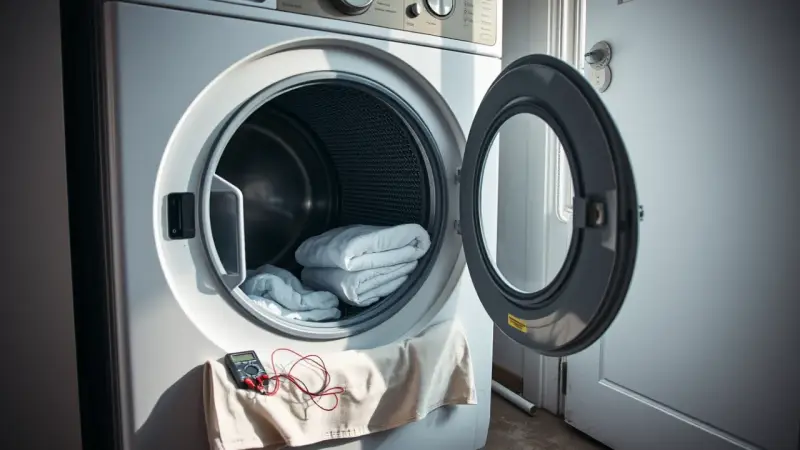
Fixing a dryer costs about $180 on average in the US, and most homeowners pay between $100 and $430. Simple jobs such as a blown thermal fuse or a worn belt land near the bottom of that range, while bigger parts and older machines push the bill toward the top. Parts alone often run $5 to $80.
The final price depends on which part failed, how long the technician works, and what your area charges for labor. The sections below break the cost down by repair, explain what moves it, and help you decide between repairing and replacing.
What is the average cost to fix a dryer?
The average dryer repair costs roughly $180, and the typical range runs from $100 to $430. Some sources stretch the outer limits from $50 to $800, but the bulk of jobs fall between $100 and $300.
Most dryer problems take about an hour to fix. A typical visit bundles a diagnostic fee, the replacement part and the technician’s time, which usually adds up to $150 to $200 for a straightforward repair.
Dryer repair cost by problem
A dryer repair costs less when the failed part is cheap and easy to reach. The table shows common repairs and the totals the ranking cost guides report, parts and labor together.
| Repair | Typical total cost (USD) |
|---|---|
| Blown thermal fuse (a common fix) | $100 to $200 |
| Heating element replacement | $150 to $300 |
| Standard fix such as a new belt | about $180 |
| Typical visit with a part under $80 | $150 to $200 |
| Major repair on the high end | up to $430 or more |
A thermal fuse is a small safety part that cuts power to the heat when the dryer overheats. A heating element is the coil that warms the air in an electric dryer. A drive belt is the rubber loop that turns the drum, so a dryer that powers on but will not spin often points to it.
What changes the price of a dryer repair?
Four factors move a dryer repair bill the most: the part, the labor, the age of the machine and where you live. Each one can shift the total by tens or hundreds of dollars.
- The failed part. Parts range from about $5 for small pieces to $80 for pricier ones, and a major component raises the total sharply.
- Labor and the service call. A diagnostic visit is usually part of the bill, and a repair that takes longer than the usual hour costs more.
- Dryer age and brand. Older models can need harder-to-find parts, and some brands, Samsung among them, charge differently for parts and service.
- Region and access. Labor rates vary by area, and a dryer wedged into a tight space takes longer to open up.
- Gas or electric. Gas and electric dryers use different heating parts, so the repair and the price differ.
Is it worth it to repair a dryer?
Repairing a dryer is usually worth it when the fix is a low-cost part on a machine that otherwise works well. Replacing makes more sense when the repair bill climbs toward half the price of a comparable new dryer.
Use this quick check before you book a technician:
- Get a written estimate. Ask for the diagnostic fee, the part and the labor listed separately.
- Price a similar new dryer. Compare the same capacity and fuel type, since a basic model costs far less than a feature-heavy one.
- Weigh the age. A repair on an older dryer is a bigger gamble, because another part may fail soon after.
- Decide. If the estimate is a small fraction of a new unit and the dryer is otherwise sound, repair it. If it nears half or more, replace it.
Worked example: a $150 thermal fuse repair on a dryer that dries well is an easy yes. A $430 repair on an aging machine, when a similar new dryer is within reach, is a closer call that leans toward replacing.
Can you fix a dryer yourself?
You can fix some dryer problems yourself, especially cheap parts like a belt or a thermal fuse, but gas lines and live electrical work belong to a licensed pro. Doing a simple repair yourself saves the labor and diagnostic charges and leaves only the part cost, often $5 to $80.
Before you open anything, unplug the dryer. Shut off the gas supply too if it is a gas model. Call a professional if you smell gas, see scorched wiring, or the problem involves the gas valve, the burner or the power supply, since mistakes there can cause fires, shock or gas leaks. A dryer that overheats is also a warning to stop using it until someone checks the vents and safety parts.
Tips before you pay for a dryer repair
- Clear the lint and vent first. Cleaning the lint screen and the vent hose costs nothing and can cure some heating complaints.
- Ask for a flat estimate. Confirm whether the diagnostic fee is credited toward the repair if you go ahead.
- Compare two quotes. Prices vary by company and area, so a second quote can show whether the first is out of line.
- Check the warranty. A newer dryer may still be covered by the manufacturer or an extended plan.
- Do the math on replacement. Price a comparable new dryer before you commit to a large repair.
FAQ
– What is the average life of a dryer?
A dryer’s lifespan depends on how often you run it, how well the vent is maintained and the build quality of the model. Regular lint and vent cleaning helps protect the heating parts and motor. If a dryer has needed repeated repairs, that is a sign to compare the repair cost with a new unit.
– How much does it cost to fix a dryer that is not heating?
A dryer that is not heating most often needs a thermal fuse or a heating element. A thermal fuse repair runs about $100 to $200, and a heating element replacement costs about $150 to $300. A technician can tell you which part failed during the diagnostic visit.
– How much does it cost to fix a dryer belt?
A dryer belt repair is one of the cheaper fixes and usually falls near the $180 average for a standard repair. The belt itself is a low-cost part, and most of the bill is the service call and labor. A dryer that turns on but does not spin often has a worn or broken belt.
– How much does it cost to fix a washer and dryer together?
Fixing a washer and a dryer costs the sum of two separate repairs, since each machine has its own parts and diagnosis. Booking both in one visit may save on a second service call, so ask the company whether it bundles them.