
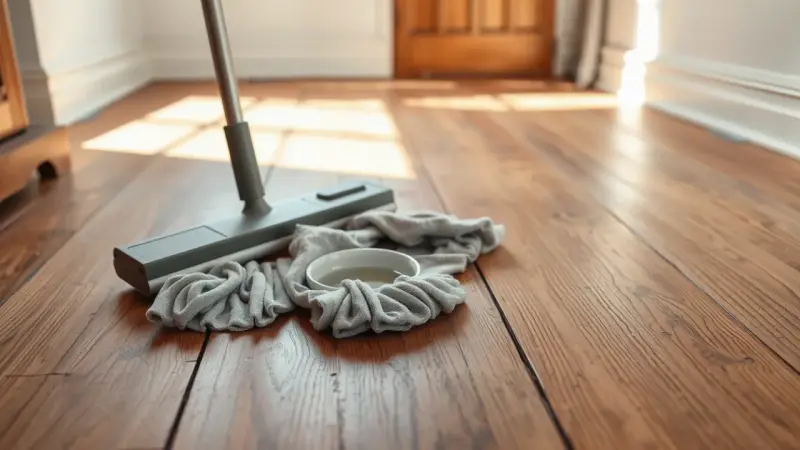
To clean old hardwood floors, first test the finish with a few drops of water, then remove grit with a microfiber dust mop or a vacuum’s hard-floor setting. Polyurethane can take a pH-neutral hardwood cleaner on a barely damp mop. Wax, shellac and unfinished wood need little or no water, so the finish decides everything.
Old floors are not fragile because they are old. They are fragile because many of them wear finishes that react badly to water, soap and acids, and because decades of sanding can leave the wood thinner than it looks. A few minutes of testing saves you from a cloudy, dull or warped floor.
How do you tell what finish an old hardwood floor has?
The water-drop test tells you which of three broad groups an old hardwood floor belongs to. Put a few drops of clear water on a hidden spot, such as inside a closet or under a radiator, and watch it for a few minutes.
- Water beads up. The floor has a modern surface finish, most likely polyurethane. This is the easiest floor to clean and handles a lightly damp mop.
- Water leaves a white ring or soaks in slowly. The floor likely has wax, shellac or an older varnish. These finishes can cloud, spot or soften with water and strong cleaners.
- Water soaks in right away and darkens the wood. The floor is unfinished or the finish has worn through. Keep water off it.
If the drop test points to an older finish, two quick checks narrow it down. Rub a hidden spot with a cotton swab dampened with denatured alcohol: if the surface turns soft and sticky, the finish is shellac. Wipe another spot with a little mineral spirits on a white cloth: a yellowish or gray smear means wax. Always test in an out-of-the-way place, because both solvents can mark the finish.
| Finish type | Water-drop result | Safe cleaning method | Avoid |
|---|---|---|---|
| Polyurethane (surface finish) | Beads on top | Dust mop, then pH-neutral hardwood cleaner on a damp microfiber mop | Wax, oil soap, steam, soaking |
| Wax | White mark or slow absorption | Dust mop, solvent-based wax cleaner, re-wax and buff | Water-based cleaners, wet mopping, polyurethane cleaners |
| Shellac or old varnish | White ring or slow absorption | Dust mop, cloth barely dampened, dry immediately | Alcohol, ammonia, vinegar, standing water |
| Unfinished or worn through | Soaks in and darkens | Dry methods only: sweep, vacuum, dry microfiber | Any liquid cleaner or mopping |
What you need to clean old hardwood floors
Cleaning old hardwood floors takes simple tools, and most of the work is dry. Gather these before you start:
- Microfiber dust mop. Traps fine grit instead of pushing it around.
- Vacuum with a hard-floor setting. Use a soft brush attachment and turn off any rotating beater bar, which can scratch soft, aged wood.
- Microfiber flat mop with washable pads. Lets you apply cleaner in a light mist rather than a puddle.
- pH-neutral hardwood floor cleaner. A ready-to-use product made for sealed wood floors, such as Bona or a similar brand, for polyurethane only.
- Clean, dry towels. For wiping up any moisture left behind.
- Soft-bristle brush. Helps lift dirt from the wide gaps found between old boards.
Difficulty: easy for routine cleaning. A first deep clean of a neglected floor can take an afternoon for a single room, mostly because of dusting and working in small sections.
Step by step: how to clean old hardwood floors
The safest way to clean old hardwood floors is to go from dry to barely damp, never wet. Follow these steps for a sealed, polyurethane-type floor, and stop at step 3 if your floor is unfinished.
- Clear the room. Move rugs and light furniture so you can reach the whole floor and the edges where dirt collects.
- Dust or vacuum thoroughly. Grit acts like sandpaper underfoot, so remove it before any liquid touches the floor. Work along the length of the boards.
- Brush out the gaps. Run a soft brush or a crevice tool along seams between boards. Old floors often have wider gaps that hold years of dirt.
- Test your cleaner. Apply a little in a hidden spot and let it dry. Look for clouding, stickiness or a dull patch before going further.
- Mist, do not pour. Spray cleaner lightly onto the mop pad or onto a small section of floor, a few square feet at a time. Liquid poured on the boards can seep into seams and swell the wood.
- Mop with the grain. Use a damp, never soaking, microfiber pad. If you use a bucket, wring the pad until it barely feels wet.
- Dry as you go. Wipe any streaks or damp spots with a clean, dry towel so moisture does not sit on the finish.
- Swap pads when they look dirty. A grimy pad spreads old dirt back over the boards and leaves a haze.
For wax floors, skip steps 5 through 7. Use a solvent-based cleaner made for waxed wood, then apply a fresh coat of paste wax and buff it. For shellac, wipe with a cloth barely dampened with water and dry it right away.
What should you not clean wood floors with?
Old wood floors should not be cleaned with anything acidic, alkaline, abrasive or very wet. These are the common culprits:
- Vinegar. Vinegar is acidic. Used often, it can etch and dull a finish over time, and it is especially risky on wax and shellac.
- Dish soap such as Dawn. Soap can leave a film that attracts dirt and makes the floor look duller after each cleaning.
- Ammonia and bleach. Both are harsh on wood finishes. Never mix bleach with ammonia or vinegar: the combinations release toxic gases.
- Steam mops. Steam forces heat and moisture into seams and can cloud finishes and swell boards.
- Abrasive powders and scrub pads. These scratch the finish, and on thin old boards there may be little wood left to sand.
- Wax or “shine” products on polyurethane. They build a slippery layer and can make the floor hard to recoat later.
- Too much water. Standing water can cause cupping, gray stains and loose boards on any wood floor.
How to clean old hardwood floors naturally
A natural option for sealed old hardwood floors is a few drops of mild dish soap in a gallon of warm water, applied with a well-wrung mop. Keep it occasional rather than routine, since soap residue builds up, and follow with a towel to dry the boards.
For unsealed or worn floors, the most natural method is also the safest: dry cleaning. Sweep, vacuum and use a dry microfiber pad. If a spot needs more, wipe it with a cloth that is barely damp and dry it at once. Do not use vinegar on unsealed wood, because the wood absorbs it directly.
When to stop cleaning and call a flooring pro
Cleaning cannot fix a finish that is gone, and some signs mean the floor needs refinishing or repair by a professional rather than more scrubbing.
- Gray or black stains. These usually mean water has reached the wood under the finish.
- Bare, worn traffic lanes. When water soaks in where people walk, the finish has worn through.
- Cupping, buckling or soft spots. These can point to moisture problems below the floor or structural issues worth a professional look.
- Possible lead paint or old adhesive. In older homes, sanding painted edges or old mastic can release lead dust or other hazards. Have a certified contractor test and handle it.
- Very thin boards. Floors that have been sanded many times may not survive another sanding. A pro can check thickness and suggest a screen-and-recoat instead.
DIY covers routine cleaning, re-waxing and spot repairs. Sanding, refinishing and board replacement are pro jobs for most homeowners. Refinishing prices vary with room size, the number of finish coats, repairs needed, furniture moving and your region, so get written quotes from more than one contractor.
Keeping old hardwood floors clean between deep cleans
Old hardwood floors stay cleaner with daily sweeping or weekly vacuuming, because fine grit is what scratches aged finishes. Place mats at entry doors, add felt pads under furniture legs, and wipe up spills right away. Keep pets’ nails trimmed, and take off shoes with hard or spiked heels indoors.
FAQ
– Is Murphy’s oil soap good for hardwood floors?
Murphy’s oil soap is not a good choice for polyurethane-finished hardwood floors. Oil soaps can leave a residue that dulls the surface and can keep a new coat of finish from bonding during a later recoat. If you have a sealed floor, a pH-neutral hardwood cleaner is the safer option.
– Can I use Dawn dish soap to wash my hardwood floors?
Dawn dish soap can be used on sealed hardwood only sparingly, as a few drops in a gallon of warm water. Frequent use leaves a film that makes floors look dull. Do not use it on wax, shellac or unfinished floors.
– How do you clean old hardwood floors from 1910?
Clean a hardwood floor from 1910 by assuming an older finish until you test it, since original floors from that era were often finished with shellac or wax rather than polyurethane. Do the water-drop and solvent tests first, dust thoroughly, and use only a barely damp cloth or a wax cleaner, depending on the result. If the floor was refinished later, it may now have a modern surface finish.
– What is the difference between sealed and unsealed hardwood floors?
Sealed hardwood floors have a protective coating on top, such as polyurethane, that makes water bead up. Unsealed floors have no coating, or one that has worn away, so water soaks straight into the wood. Sealed floors can take a damp mop; unsealed floors need dry cleaning.
– What is the best unsealed wood floor cleaner?
The best cleaner for an unsealed wood floor is a dry one: a microfiber dust mop or a vacuum with a soft brush. Liquids, including vinegar and soap solutions, soak into bare wood and can stain or raise the grain. For lasting protection, consider having the floor sealed.